
Skip to content

Freezer Panels

Walk-In Freezer Panels.
Installed by Our Crew.

We build walk-in freezers with 5-inch or thicker insulated metal panels. An RSNE crew lead runs every job, site visit to final trim.

Why 5 inches

Freezer Panels Work Twice as Hard.
So Ours Start at 5 Inches.

A −10°F freezer in a 75°F room has an 85°F gap between inside and out. A 35°F cooler in the same room has a 40°F gap. More than twice the gap lets more than twice the heat through the same wall, so a freezer needs thicker panel.
Coolers, 4-inch panel. Freezers, 5-inch or thicker. Colder rooms get thicker panel.
Federal rules set the minimum. R-32 for walk-in freezer walls and ceilings, R-28 for the floor.
Poured polyurethane or polyisocyanurate foam between two steel skins, from six panel makers. We pick the one that fits your room.
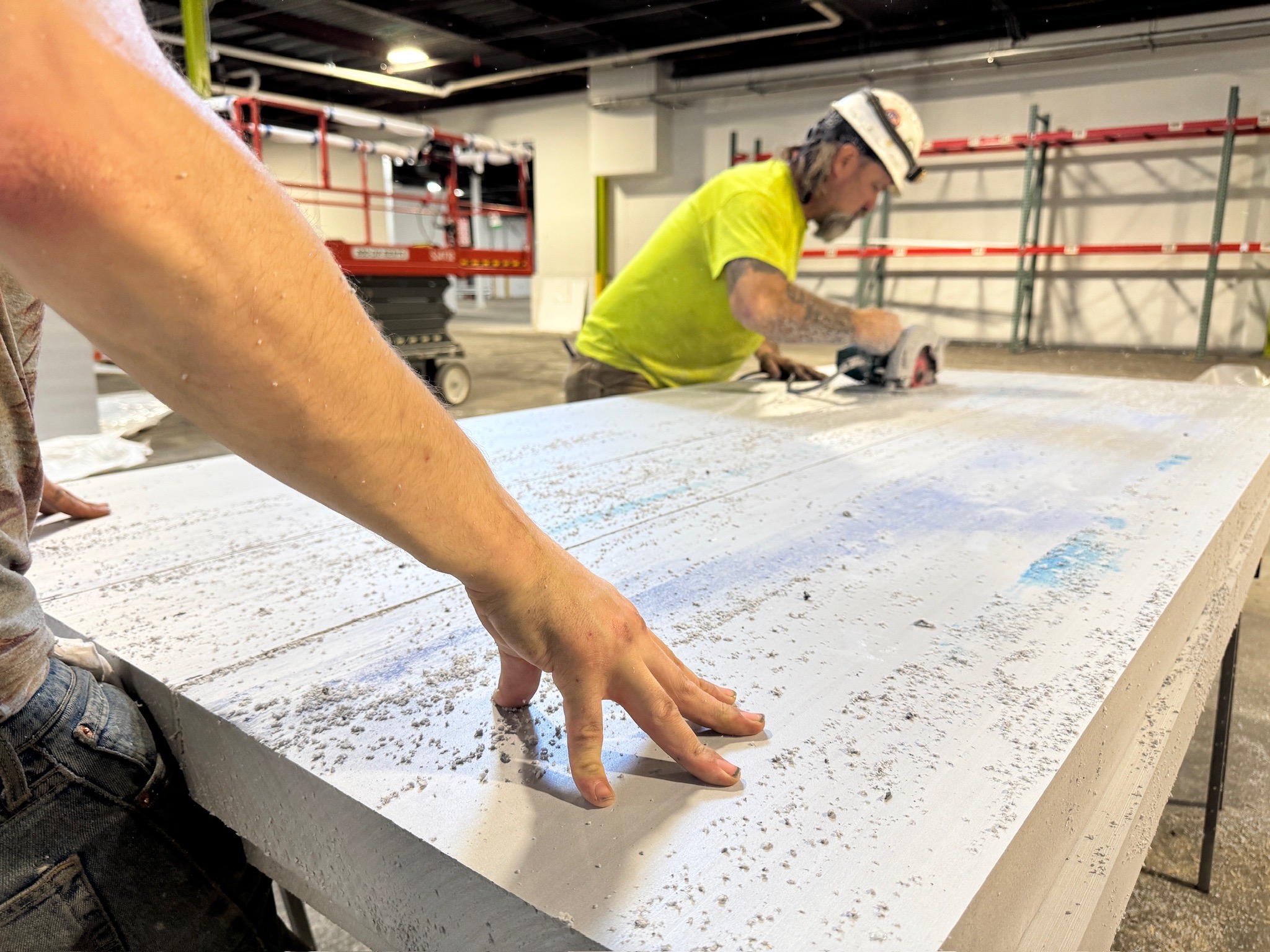
An RSNE crew member cutting an insulated metal panel with a circular saw on a job site

The floor

The Floor Is a Wall Too.
We Insulate It Like One.

A freezer slowly freezes the ground under it. Wet ground swells as it freezes and pushes the floor up. Insulation under a freezer slows that down. It doesn’t stop it. A heated floor keeps the ground above freezing.
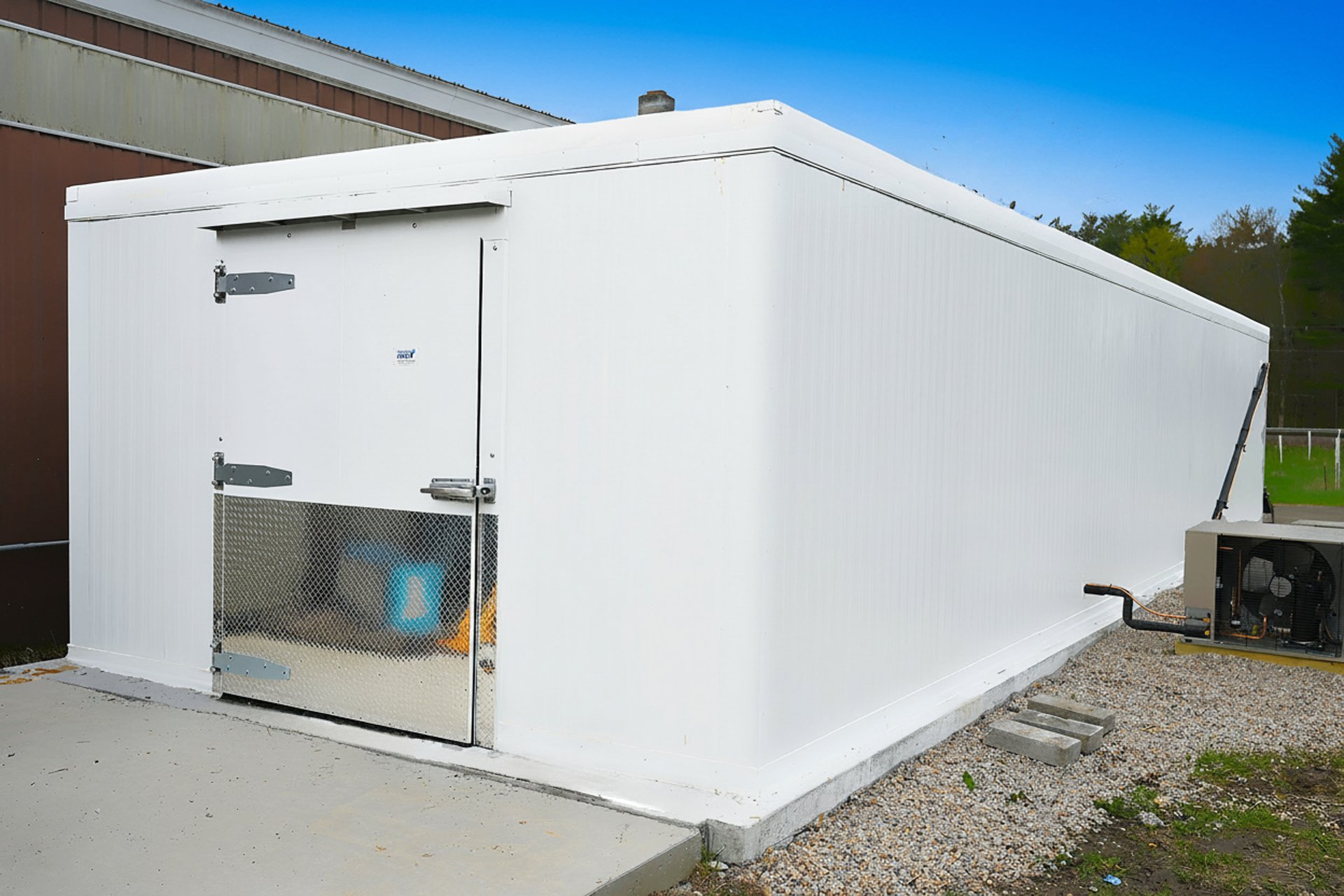
Small walk-in freezers: insulated floor panels on your slab, with a ramp where the door needs one.
Large freezers: insulation under the slab. We set DOW insulation board and a vapor barrier, and the concrete pours over them.
Heat under the slab: forced heated air. We lay the PVC piping that carries the warm air and provide the mechanicals. The concrete pours over the pipe.
Or a glycol floor, installed by our partner companies. We help manage and coordinate it.
Coolers kept above freezing don’t need floor heat.
Outdoor walk-in cooler and freezer combo RSNE built behind the Berkshire Grown building in Great Barrington, MA

Doors and vents

Heat in the Door Frame.
A Vent in the Wall.

A freezer door frame is cold metal next to warm air, and the gasket sits right there. Without heat, frost builds on the frame and the gasket freezes to it.
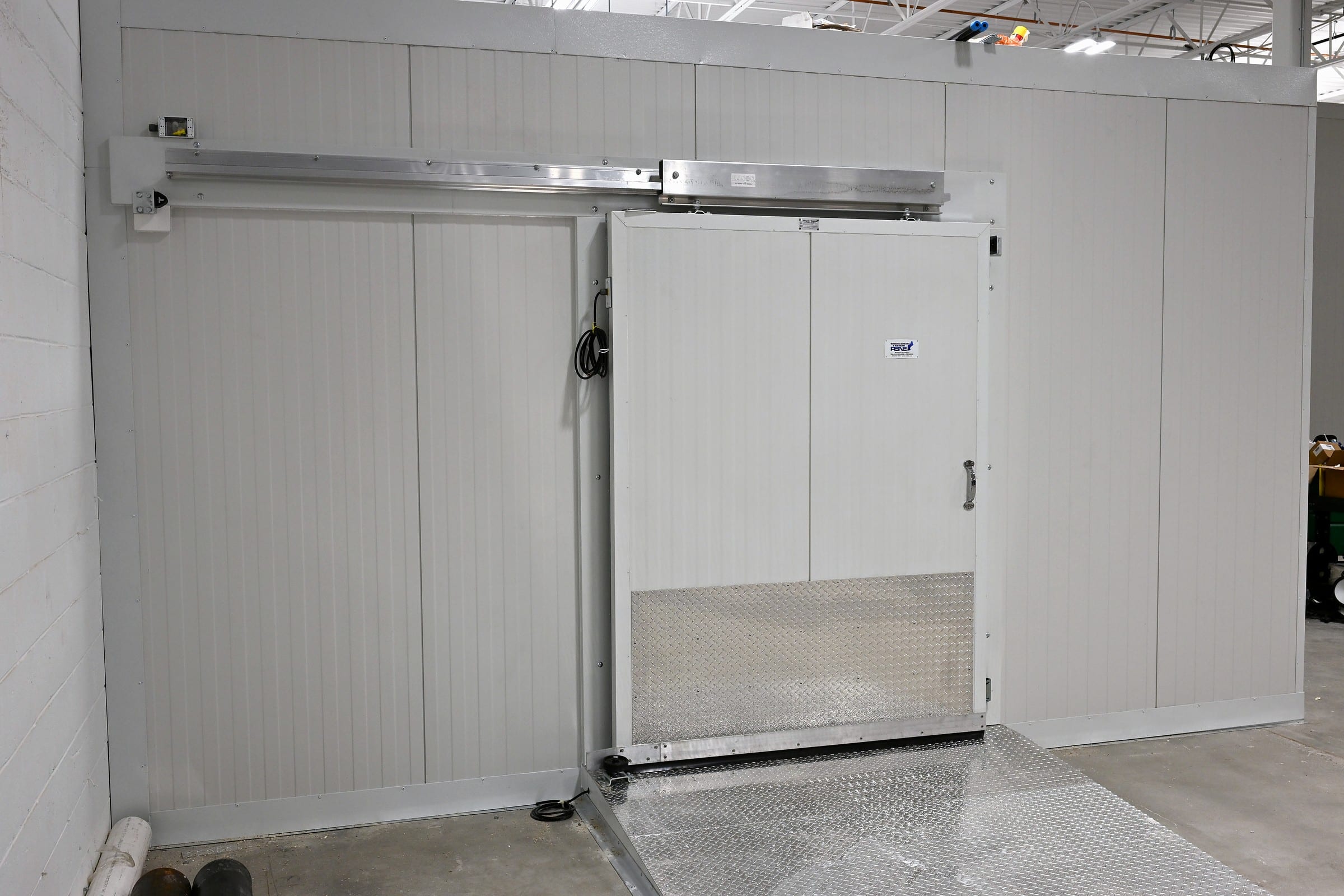
Heater wire in the door frame, so the gasket can’t freeze to it.
A pressure relief vent on most freezers we build. Warm air that comes in through the door cools, shrinks and pulls a vacuum that can hold the door shut. During defrost, the opposite happens. The vent lets the air even out.
We build, install and service the door. Our custom freezer doors are made in our Lakeville shop.
Freezer door on an overhead track in the cooler and freezer RSNE built for ZeptoMetrix in Franklin, MA

Trim and hardware

Moisture Gets In at the Seams.
So We Seal Every One.

Moisture always pushes from the warm, damp outside toward the cold inside. The steel skin stops it. Once water gets into the foam, it freezes, the wall loses its insulation there, and the ice keeps growing.
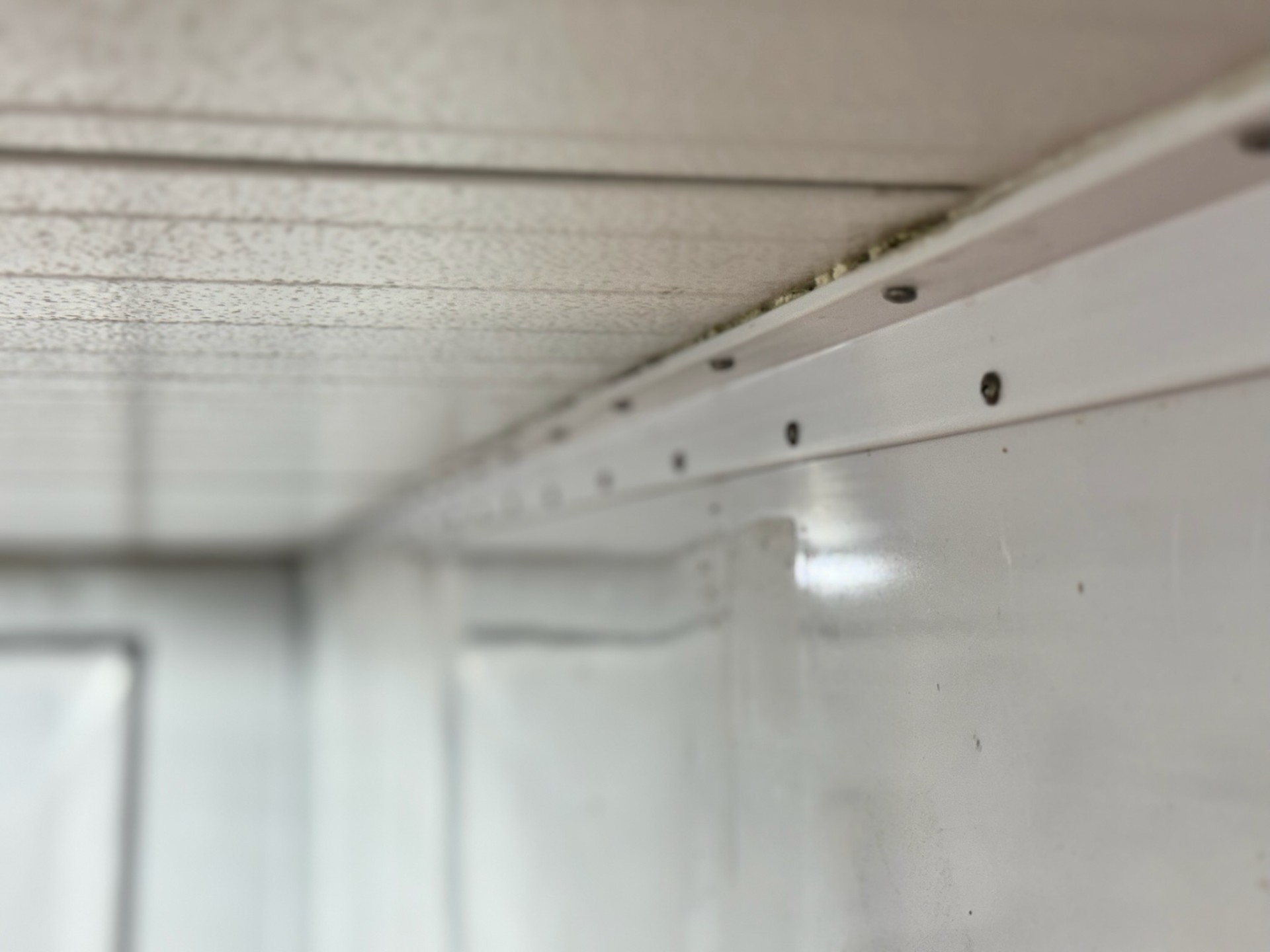
Corner, wall-to-ceiling and floor trim, sealed the whole run.
Door hardware: hinges, closers, handles, sweeps and gaskets.
Thresholds and strip curtains at the doorway.
Trim and hardware replaced on boxes we didn’t build.
Sealed panel joint where the wall meets the ceiling in a walk-in cooler RSNE built for Yankee Spirits

Start Your Project

Tell us the room. We’ll tell you the panel.

01
Site visit & consult
We measure and listen, then quote.
02
Estimate
What we’ll do, in writing, within 2 business days.
03
Schedule
A date we set together, and keep.
04
Build
We build and install it in your building.
Start Your Project

1-year warranty on our labor and every RSNE-built door. Depending on the specs, we can start in as little as two weeks.

FAQ

Common Questions.

What thickness panel does a walk-in freezer need?
We build freezers with 5-inch or thicker insulated metal panels. Federal rules set R-32 as the minimum for walk-in freezer walls and ceilings, and R-28 for the floor. Colder rooms get thicker panel, and we size it at the site visit.
Can you replace one damaged freezer panel?
Yes. We cut the damage out, put in new panel matched to your thickness and finish, and seal it back up. See panel repair and replacement.
Does a walk-in freezer need a heated floor?
Not always. A small walk-in on insulated floor panels usually doesn’t. A large freezer slowly freezes the ground under it, and wet ground swells as it freezes and pushes the floor up, so large freezers need insulation and heat under the slab. We set the insulation, build forced-air heat under the slab, or coordinate a glycol floor with our partners. We tell you which at the site visit.
Why is my freezer door hard to open right after it closes?
Usually the pressure relief vent is iced over or has stopped working. Warm air that came in through the door cools, shrinks and pulls a vacuum that holds the door shut. A working vent lets air back in. Call us and we’ll take a look.

Still have questions?

Call us and talk through your freezer.

(508) 946-5555

Monday to Friday, 7 to 4.